Tuesday, May 3, 2016

Can Not Flossing Lead to a Heart Attack?

Let’s break down the benefits of flossing, what happens if you don’t floss, the proper way to floss and some tips and tricks for remembering to add the important step to your nighttime routine.

1.      What are the benefits of flossing?

The main benefit of flossing is the removal of plaque buildup between your teeth and in the gingival sulcus. The plaque causes inflammation of the gingival and can lead to periodontal disease in addition to caries between the teeth. This is one of the most common areas of decay.

2.      What happens when we don’t floss?

When we don’t floss the plaque between the teeth and in the gingival sulcus continues to grow and release acidic byproducts that cause caries and gingivitis


3.      What is the biggest mistake you see when it comes to flossing?

The biggest mistake most people make is not flossing enough. But when they do floss they need to make sure they wrap the floss around the tooth, and drag the floss deep into the gingival sulcus. When patients see blood from flossing they tend to not take the floss deep enough in the sulcus to get all of the plaque removed or they stop flossing as much.  When what they should be doing is actually flossing more often. Another mistake I see patients make is skipping around the mouth when they floss. It’s best to go from one side to the other to avoid missing areas.  

4.      When should we floss?

Ideally, the best time to floss is before bed. It’s always best to go to bed with the cleanest teeth possible. When you sleep your saliva glands aren’t as active leaving your mouth drier. The drier your mouth the higher the bacterial levels. The higher bacterial levels result in more acid produced.  You can floss before or after you brush. It doesn’t matter. It should be once a day and if you can’t floss at night, my motto is floss when you can. Some people floss on their commute to work. A good time to floss is whenever you have time to floss. 

5.      Can gum disease lead to heart disease?

There aren’t any studies that show a direct causal relationship, but there is a strong link between chronic inflammation and heart disease. And there are studies showing  that many of the patients with heart disease have experienced gingivitis and/or periodontal disease.  Also, some scientists theorize that as bacterial levels increase, as with gum disease, the bacteria could be entering the bloodstream, adhering to the walls of blood vessels and causing plaque formation and eventually clots.

6.     What are some easy ways we can remember to add flossing to our nighttime routine? (Easy tips and tricks)
           
The key to starting a habit is making it as easy as possible to do. I would recommend having the floss that you like at the ready. Set it next to your toothbrush. Most people brush their teeth before bed. Try flossing before you brush. Make an effort/habit of flossing before you brush, almost as a prerequisite before you’re allowed to brush. Some other things you can do is set a nightly reminder on your phone, or place a simple sticky note on your bathroom mirror reminding you to floss. Usually, after you do something repetitively for 3-4 weeks you can establish a habit, good or bad.  

7.     Do you recommend regular floss, dental picks or pre-threaded flossers? Is there anything we should know about the different kinds of dental floss (waxed, unwaxed, thick or comfort floss?) 
           
The best floss is the floss that you like to use. There are basically two types of floss, waxed and non-waxed. Studies show that there is no difference in the ability to remove plaque and prevent decay and gingivitis.

8.     Can mouthwashes and rinses take the place of daily flossing? 
           
No, plaque can only be removed by physically removing it off of the teeth. Plaque is very sticky and cannot be removed by a liquid. Even using a WaterPik cannot remove all of the plaque unless turned up to a level that may cause damage to the gingiva. Some mouthrinses can kill the surface bacteria, but not the bacteria that make up the bulk of the plaque. 

Thursday, April 14, 2016

What You Need to Know About Wisdom Teeth


At any given time, ask half a dozen adults around you about their wisdom teeth, and there is a good chance you will find that most have had them removed. This is common, considering what they are and some of the risks that they may pose. Many people have them removed during their younger years, for valid reasons, making it a good idea to be familiar with the ins and outs of these teeth, so that you will be better able to deal with them for you and your family.

What Are Wisdom Teeth and Why Are They Removed?
Wisdom teeth, also referred to as your third molars, are the larger teeth at the very back of the mouth. They are the last teeth to come in, usually somewhere between the ages of 15 and 25, which is considered to be the “age of wisdom,” hence their name. While some people have no problems with their wisdom teeth erupting, many others find that they present a challenge and can be risky to the health of your other teeth.
About the time that this third set of molars begins erupting, some common problems also emerge as a result. Some of the problems associated with erupting wisdom teeth include:
Impaction: According to the Nation Institutes of Health, wisdom teeth are the most common to teeth to become impacted. When a tooth is impacted, it means that the tooth has failed to emerge through the surface of the gum, or that only a portion of it has emerged.
Caries: An impacted third molar leads to a high probability of creating dental caries, or cavities, both in that tooth and in the one next to it, as well. This is because they often trap plaque in the area, which is difficult to reach and to clean.
Cysts: When wisdom teeth are impacted, it can cause cysts and tumors to form around the area. This is lead to additional problems because it can affect the bone, and even damage the jaw. Risks with this involve infections, as well as tooth abscesses.
Misalignment: The emerging wisdom teeth may not be coming in straight or, even if they do, can cause problems with the other teeth. As they emerge, they often push the other teeth out of alignment.
Discomfort: The vast majority of people who have dealt with emerging or impacted wisdom teeth know just how uncomfortable the experience can be. From the headaches to toothaches, pain, swelling, and feeling ill, the discomfort associated with wisdom teeth can make you miserable.

When to Remove Wisdom Teeth?
The best time to have your third set of molars removed really depends on the tooth’s development. A good professional rule of thumb is to have them removed when two-thirds of the root has formed. Ideally, it is recommended that people have them removed by the time they turn 24 years old. This is because it has the ability to re-grow bone in that area of the jaw is reduced as time goes on. Also, the third set of molars are usually easier to remove when you are younger, and the recovery period is also shorter during that time.
The presence of your third set of molars is usually associated with an increased risk of periodontitis, which is an inflammation of the gums and bone which can lead to tooth loss, abscesses, infections, and tooth shifting. It is important to note, as well, that an absence of symptoms does not mean that there is not problem or disease.
Additionally, research regarding people who did not have their wisdom teeth removed demonstrates that, the older they got, the more common it was for them to have cavities in those teeth, as well as in the adjacent ones, due to the difficulties of keeping them properly cleaned. In fact, a 2011 study published in the Journal of Oral and Maxillofacial Surgery reported that, of the nearly 7,000 older adults they studied who had at least one third molar, most of those people had caries or periodontal pathology involving those teeth, and that few had visible molars that were free of disease.


Additional Concerns
There is some controversy regarding whether those who wear a retainer or have had braces in the past need to continue wearing their retainer once the wisdom teeth have been removed. Because there is a risk of relapse if the retainer is not worn, it is recommended that patients continue wearing theirs, as recommended by their orthodontist. Doing so will help to eliminate the risks associated with shifting teeth.
If you are experiencing the emergence if your wisdom teeth, or someone in your family is, be sure you know the facts, risks, and options that are currently available. Having wisdom teeth removed is a common procedure today, one that most people recover from without issue. Removing third molars can be an important step to take if you are having problems now, or as a preventative measure to avoid issues that can arise later.

Addressing the Issue
Either way, it is important to speak with your doctor to learn more about your specific third molar development, risks, and options. When you are dealing with your third molars, it may seem as if they steal the show, due to the discomfort they can cause. But it doesn’t have to be like that, since this is an issue that can usually be addressed without difficulty.

Wisdom teeth really are an issue that is better dealt with sooner, rather than later, in order to avoid a lot of discomfort, as well as the risk of an array of complications. Besides, when you address this issue head on, rather than putting it off and prolonging the issue, you will find that you gain the wisdom, without the worry!


Tuesday, March 1, 2016

What’s in my mouth? A Brief Rundown of Orthodontic Appliances.

Are you curious what's in your mouth? Dr. Gonzales and our team correct the alignment of your teeth and jaws so that you can speak clearly, chew food effectively, and look attractive when you smile. We do this by putting sophisticated gadgets in your mouth. While many of these dental devices look similar, we use a wide variety of orthodontic appliances to straighten your teeth and repair jaw problems.

Orthodontic appliances are devices that move your teeth, change the position of your jaw, or hold your teeth in their finished positions after your braces are removed. These devices may be removable or attached to your teeth.

Braces straighten your teeth. Brackets, bands, and wires characterize traditional braces. Braces are attached to the teeth, so they are not easily removable.

Spacers or Separators are small plastic rings fitted between your back teeth before your braces. These spacers create space between your teeth that allow us to place bands on your back teeth that will serve as the "anchor brace".


Retainers hold teeth in their finished position after your braces come off. A Hawley retainer is the most common type of retainer and has been used for decades; it features an acrylic plate that rests against the roof of your mouth and a wire crossing in front of your teeth. Essex retainers have been in use for around 25 years and are quite popular, as they are durable and nearly invisible.

Bite plates are like a Hawley retainer and help correct a deep overbite, where the upper front teeth come down too far over the lower front teeth to cause bite problems.

Holding arches or Lingual Arches prevent the back teeth from moving forward to crowd the front teeth during the mixed dentition stage (age 7-11).  A lower lingual holding arch prevents your permanent molars from migrating forward. The Nance holding arch is used on the upper arch only and maintains the upper molar position while all of the other teeth erupt. This helps hold space open while your permanent teeth erupt. This is similar to the Lower holding arches.

A palatal expander widens your upper jaw by separating the bones of your palate. This appliance helps correct a posterior crossbite and helps your top and bottom teeth fit together better. 

The Quad Helix is also a palatal expander and widens your jaws to correct crossbites.


Contact our office today to learn more about the ways we can improve the appeal and function of your smile.

Wednesday, January 13, 2016

Five Causes of Bad Breath

Bad breath, or halitosis, is not the worse health problem to have, but it can make you feel self-conscious and have a negative impact on your life. The majority of people suffering from bad breath are dealing with oral bacterial. However, there are other causes of this embarrassing problem. Learning more can help you fight this solvable problem.


Five Causes of Embarrassingly Bad Breath

1. Dry Mouth.
A decrease in saliva flow can be caused by several things. Most often, medication or mouth breathing are the culprits. As saliva helps wash away food particles from your mouth, it prevents bad breath. Dry mouth can be dealt with by stimulating salivation.

2. Gum Disease and Poor Oral Hygiene. Not brushing and flossing well enough or with enough frequency can lead to gum disease, which leads to bad breath. Halitosis can be a sign that plaque is present on your teeth.

3. Food-Related Bad Breath. Food particles that aren’t brushed or flossed away attract bacteria that leads to bad breath. It’s especially important to brush after eating strong-smelling foods, such as garlic or onions.

4. Smoking and Tobacco. Tobacco is bad for your health, and that includes your oral health. Smoking or chewing tobacco can contribute toward the development of gum disease, as well as oral cancer.

5. Mouth Infections and Other Medical Problems. A mouth infection, sinus infection or even the common cold can cause you to temporarily have bad breath. Even conditions such as diabetes and reflux can cause halitosis

Even if you maintain good oral hygiene, it’s important to see Dr. Gonzales to deal with or avoid problems with bad breath. We can help you uncover the cause of halitosis, while also providing solutions that allow you to enjoy fresh breath without relying on mints and breath fresheners. As is the case with all things related to oral health, we are your number-one ally when it comes to eliminating the problem of bad breath. Cheers to a fresher breath and a beautiful smile!

Tuesday, December 22, 2015

10 Foods For Protecting Your Teeth and Gums

A beautiful smile and healthy mouth can be attributed to regular brushing and flossing as well as a daily diet that does not lack the essential vitamins and minerals that make vital contributions to a persona’s oral health. Many people overlook the importance of good nutrition in keeping their smile beautiful and their mouth healthy. Below, you will learn about ten foods that protect your teeth and gums.


1. Celery – Protects Teeth from Cavities
Celery protects your teeth in two ways. The extra chewing it requires produces plenty of saliva, which neutralizes the bacteria Streptococcus mutans that causes cavities. Additionally, chomping on naturally abrasive foods massages gums and cleans between teeth. Try This: Snack on a handful of raw celery or carrots once a day for protect gums and teeth.

2. Cheese – Preserves and Rebuild Tooth Enamel
Studies from the last decade show that cheese, with its low carbohydrate and high calcium and phosphate content, provides several benefits for your teeth. It helps balance your mouth's pH (an acidic pH encourages the growth of dental cavity-causing bacteria). Cheese also preserves and rebuilds tooth enamel and produces saliva, which kills the bacteria that cause dental cavities and gum disease. Try This: Enjoy a 1-inch cube (about 1/2 ounce) of cheese after dinner instead of a sweet dessert.

3. Green Tea – Removes Plaque and Bad Breath
Green tea (Camellia sinensis) contains substances called catechins that kill the bacteria in your mouth that turn sugar into plaque (a sticky mass of bacteria, sugars, proteins, and fats that produces cavity-causing acid when it comes in contact with sugary or starchy foods). Catechins also wipe out the bacteria that cause bad breath. Try This: Drink 2 to 5 cups of green tea (regular or decaffeinated) a day, says Mindy Green, director of research at the Herb Research Foundation in Boulder, Colo. Consider making a thermos of green tea to drink at work. The night before, steep 3 to 4 green tea bags in 4 cups of boiling-hot water in a covered thermos for three to five minutes. Remove the bags. Serve the tea the next day over ice or after reheating it.

4. Kiwis – Prevents Gum Disease
For their size, kiwis pack more vitamin C than any other fruit. In fact, one large kiwi supplies more than 100 percent of your recommended daily amount. If you don't get enough vitamin C, research shows that the collagen network in your gums can break down, making your gums tender and more susceptible to the bacteria that cause periodontal (gum) disease. Try This: Instead of topping your morning oatmeal with brown sugar, use a sliced kiwi.

5. Onions – Kills Bad for Mouth Bacteria
Onions contain powerful antibacterial sulfur compounds. In a 1997 test tube study, onions killed various types of bacteria, including S. mutans. Research indicates that they are most powerful when eaten freshly peeled and raw. Of course, raw onions can do a number on your breath, so be sure to have some fresh parsley on hand (see below). Try This: Add a few onion slices to salads and sandwiches each day.

6. Parsley and Mint – Bad Breath Remedy and Sweet-Smelling Breath Creator
Chewing parsley or mint leaves after a pungent meal will help you maintain sweet-smelling breath. These herbs contain monoterpenes, volatile substances that travel quickly from your bloodstream to your lungs, where their odor is released via your breath. Try This: Top zesty dishes with a few tablespoons of minced fresh parsley or garnish dessert with a few sprigs of fresh mint.

7. Sesame Seeds – Cleaning Teeth and Removing Plaque
According to fossils, our Paleolithic ancestors had great teeth. Anthropologists suggest that this is partly due to the cleansing action of primitive foods like seeds, which slough off plaque and help build tooth enamel. Sesame seeds, for example, are also high in calcium, which helps preserve the bone around your teeth and gums. Try This: Sprinkle a tablespoon of sesame seeds on salads and steamed vegetables a few times a week for a gentle teeth cleaning and 87 mg of calcium.

8. Shiitake Mushrooms – Prevents from Creating Plaque
A 2000 study in Caries Research showed that lentinan, a sugar found in shiitake mushrooms, prevents mouth bacteria from creating plaque. Try This: A few times a week, add four to five sliced shiitakes to soups or stir-fries. Buy fresh shiitakes or dried ones, which can be reconstituted by soaking them in hot water for about 25 minutes before use.

9. Wasabi – Protect Teeth from Cavities
Otherwise known as Japanese horse-radish, this condiment not only provides zing to sushi, it also protects your teeth. A 2000 study in Biofactors revealed that the substances that make wasabi taste hot, called isothiocyanates, also inhibit the growth of cavity-causing bacteria. Try This: Eating wasabi a few times a week will protect you from cavities. For a smile-saving salad dressing, combine 3 tablespoons rice wine vinegar, 1 tablespoon honey, 1 teaspoon wasabi paste, 1 teaspoon soy sauce, and 1/2 teaspoon sesame oil.

10. Water – Keeps Teeth and Gums Health
Drinking water keeps your gums hydrated and is the best way to stimulate saliva – your body”s greatest defense against the bacteria that cause plaque and cavities. Rinsing your mouth with water also helps wash away trapped food particles that decompose in the mouth and cause bad breath. Try This: Aim to drink six 8-ounce glasses of purified water throughout each day to keep your gums (and whole body) hydrated and to stimulate saliva. If you can”t brush your teeth after eating, be sure to rinse your mouth with water.

Wednesday, November 25, 2015

What to Expect the First Few Days of Getting Your Braces On

"I heard this was going to hurt"

While everyone experiences the first few days in braces or Invisalign differently, you probably heard right. During the first few days in treatment, your teeth will probably be sore or will feel rather odd, or awkward.  The first day you get your braces you will probably just feel weird, like you have something foreign in your mouth – because you do. You are most likely to feel pain and soreness during the second and third days. After the third day, you should be fine. If you experience any pain with your braces, there are a few things you can do to get some relief.

Home Remedies

Rinsing your mouth with warm salt water will soothe it and promote healing. Rinse several times a day or when your mouth has troublesome sores. You can also take Tylenol or Ibuprofen every four hours. Dr. Gonzales also suggests chewing a small piece of sugarless gum to help stimulate blood flow and reduce some tension. You may experience the most pain when eating. Take some Tylenol or Advil about an hour before you are going to eat. This will reduce the amount of pain experienced when eating.

You can also eat cold foods like ice cream or yogurt. The coolness of the food will help dull the pain. Ice packs applied to your mouth will help as well. You can also swish ice water around your mouth, but DO NOT eat ice, as it might break a bracket or two.

Cool Products


Products for canker sores can be applied to the mouth sores you develop from your braces. In addition, rinsing with Peroxyl by Colgate can help numb your cheeks to the pain and help heal any sores you develop in your mouth.


Dr. Gonzales and our team may have given you dental wax to put on the abrasive areas of your braces to protect your mouth. Putting dental wax on the brackets creates a barrier that keeps your mouth from getting scraped and sore.

Wednesday, October 21, 2015

The Types of Sweets to Avoid this Halloween (if you're in braces)!

The ghoulish holiday, Halloween is right around the corner which can be exciting for most, but for those of you in braces, there are some candies to avoid. The sticky, hard, and gooey: these candies fill your dopamine receptors with spasms of sugar-filled joy, but if you’re undergoing orthodontic treatment at Gonzales Orthodontics to straighten your teeth, then these sweets are not so sweet.
Here are six culprits that Dr. Gonzales and our team recommend leaving on the candy aisle and not put in your mouth, no matter how tempting they may be.
1. Gum is sticky and stringy. It can get tangled like fishing net in your braces. You don’t want to be that person trying to pull knots of Wrigley’s out of your braces without being seen.
2. All chewy, gooey candies need to be avoided. When you’re wearing braces, don’t even think about putting a caramel candy in your mouth. Caramel will not only stick to your braces, making it look as if you haven’t brushed your teeth in a week, but the gooey texture can pull apart the wires, and trigger an emergency visit to our office.
3. Hard candy may seem like a safe choice, but it’s not. What’s the problem? Nobody ever just sucks on hard candy; sooner or later, we bite down on it. Biting a hard candy may cause part of your braces to snap. Furthermore, once the candy is broken into a bunch of little pieces, it’s not uncommon for one of those sugary shards to get wedged between your braces and teeth … and that’s a cavity waiting to happen.
4. The taffy you enjoy getting at a seaside boardwalk is going to have to go on the back burner. Like caramel, taffy can pull apart and damage your braces. You don’t want to have your expensive orthodontic gear replaced.
5. Please, just one lollipop? Nope. A lollipop is nothing more than hard candy on a stick. If you can’t have hard candy during orthodontic treatment, then you shouldn't have hard candy on a stick either.
6. Other items to avoid are licorice, nuts, popcorn, jelly beans and caramel apples. Again, we're worried about the sticky, hard and gooey!

Halloween is meant to be spooky and fun, so by avoiding these candies and snacks, you will ensure yourself the trouble of having to visit our office by keeping your teeth happy, while keeping your brackets and wires intact!

Be safe and have a very, Happy Halloween!


Monday, September 28, 2015

Braces-friendly Recipes

Did you know that more than four million children throughout the U.S. and Canada have braces? At Gonzales Orthodontics, Dr. Dante Gonzales and our staff know that kids can be picky and meticulous eaters. If cooking for children without braces is difficult, preparing meals for children with braces is especially daunting. As a tip, your children can still eat those foods they would normally bite into by simply cutting the food into small pieces and chewing with their back teeth. This means your children can still enjoy their favorite foods!

“Comfort food takes on a whole new meaning when cooking for children with braces,” says Pamela Waterman, author of The Braces Cookbook: Recipes You and Your Orthodontist Will Love. “Whether you have new brackets, elastics, headgear, or more, there are great foods you can eat; it just takes some thought.”

These five braces-friendly dinner recipes will be sure to keep your kids smiling! 

1.   Macaroni and cheese is the ultimate comfort food. Pasta is soft, so it’s easy for children with braces to eat. The warm, gooey cheese melts in the mouth and doesn’t get stuck in the braces like hard or sticky foods. Chances are good that even the pickiest eater has a soft spot for this homespun classic.

2.   The key to braces-friendly cooking is to replace hard, crunchy foods with softer substitutes. In other words, burritos are a better option than tacos, and lasagna is a better choice than pizza. At the same time, if you have the culinary skills to whip up a pizza with a soft crust, you’re going to win the Best Mom (or Dad) of the Year award.

3.   Your child may not like fruits and vegetables. In fact, he or she may even try to convince you that with new braces, fruits and vegetables are off limits. Nice try, kids. While your child is wearing braces, prepare meals with cooked vegetables instead of raw vegetables. A vegetable stir-fry is a healthy and soft dinner choice for kids with braces.

4.   Whether it’s beef or chicken, meat is a good source of protein. However, meat, even when it’s carefully taken off the bone (kids with braces should never eat meat from a bone), can easily get caught in braces. Sloppy Joes are a good alternative. The beef is softened by the addition of the sauce and less likely to get strung in the wires and brackets of the braces. Serve the Sloppy Joes with a side of mashed potatoes.

5.   Ask any child and he or she will tell you that the best part of dinner is dessert. While hard candy, licorice, taffy, caramel, popcorn, and all other chewy candies should be avoided, ice cream and cake are braces-friendly treats that keep kids smiling.

On a side note, stay healthy! Don’t fall into the ice cream trap. Sure, it’s good for a treat, but it won’t give you the nourishment you need to look and feel your best. Eating soft food doesn’t mean eating unhealthy. Here are some suggestions for meals on a typical day when you first get your braces on:
  • Breakfast – pack in the protein with a fruit smoothie and scrambled eggs
  • Morning snack – two cubes of soft cheese, like Laughing Cow and a banana
  • Lunch – tomato soup and a “salad” of carrot and cucumber ribbons (made with a veggie peeler)
  • Supper – meatloaf, mashed potatoes and gravy
  • Night-time snack – baked apples with maple syrup
And of course, remember to stay hydrated and drink lots of water throughout the day, avoiding pop and sugary drinks as your teeth are even more susceptible to cavities when you have braces.

Need more braces-friendly food ideas?  Have questions on what not to eat? Feel free to ask any member of our team or call our office at 925-828-2244.


Happy Eating!

Tuesday, August 11, 2015

What is the Difference Between an Orthodontist and a Dentist that Does Orthodontics?

It is getting more difficult to tell the difference between an orthodontist and a dentist who does orthodontics. It is common to have a patient tell me that their former “orthodontist” was the same doctor who made their crowns or cleaned their teeth. Because their dentist also offered to straighten their teeth, they just assumed he or she was an orthodontist too. So what is an orthodontist? What makes him or her different than a dentist who does orthodontics? Does it really matter?
An orthodontist is a licensed dentist who, after graduating from dental school, returned to a university or medical center accredited by the American Dental Association for two to three years of comprehensive training in the correction of every type of malocclusion (bad smiles and bites). Getting into an orthodontic specialty program is very competitive. Students who are accepted into post-graduate residencies have usually graduated at the top 1-2 percent of their dental school class. Orthodontic residents devote at least 12-14 hours a day, 5-6 days a week, for 2 to 3 years learning to diagnose and treat everything from a little space that can be fixed with a simple retainer to the most difficult under-bite that requires 3 to 4 years of treatment in addition to jaw surgery. That amounts to 5,000 to 6,000 additional hours of intense, supervised training after dental school.
In my residency at the University of Pacific, I was required to start and finish 50 patients with problems of every kind so that I could get hands-on experience in a controlled clinical setting. Because my residency was in a large dental school, I was exposed to difficult problems of every kind. Orthodontic residents are mentored by professors and adjunct faculty members who are themselves specialists and have years of experience. In addition to 6 hours of hands-on clinical instruction every day, I also received post-graduate level courses in genetics, statistics, growth and development, orthodontic theory, biomechanics, research techniques, surgical orthodontics, and cleft palate just to name a few. Finally, I was required to perform an original research project that would help advance the field of orthodontics.
Since I also graduated from an ADA accredited dental school before my two-year orthodontic residency, I know exactly how much orthodontic training general dentists receive. At most dental schools, graduating dentists receive little to no orthodontic training.  Dental school was the most challenging four years of my life. The clinical instruction I received in school made me proficient in the important procedures most commonly performed by a general dentist like cleaning teeth, filling teeth, making crowns, bridges, and dentures, and performing simple root canals and extractions.
In the 3rd or 4th  year of school, dental students do rotations through the various dental specialty departments so that they are exposed to more difficult issues they may encounter after graduation. These rotations may or may not allow students to actually perform the procedures they mainly observe. My rotations included periodontics (gum and bone surgeries), endodontics (root canal therapy), pedodontics (children’s dentistry), prosthodontics (replacing missing teeth), oral surgery (removing teeth and jaw surgery), and orthodontics. In addition to shadowing these specialists for a few weeks, we generally had a semester-long class that gave us an overview of each specialty. As a dental student I made one retainer for a patient and that was the extent of my hands-on orthodontic training. I can tell you that I was in no way qualified to diagnose, treatment plan, or provide braces for anyone with the minimal orthodontic training I received even though I graduated at the top of my class out of 160 students.
When a dental student passes his or her boards, he or she becomes legally licensed to provide all dental procedures regardless of his or her training or experience. As a new dentist, I felt comfortable diagnosing and treating common dental problems. I could clean teeth, fill cavities, make crowns, bridges, and dentures, do simple root canals, and perform simple extractions. After graduation, there are continuing education courses available that allow dentists to further their education and expand the range of services they offer in their practices. Some of these are offered at universities, but most are for-profit courses offered by vendors on the weekends in hotels or conference centers. Unlike competitive university specialty programs, the only requirement for these courses is payment of the enrollment fees. Whereas university based specialty programs give residents two to three years of invaluable hands-on clinical experience and rigorous course work. You read and study all of the studies that have been done to make sure you understand the fundamentals of orthodontics. The weekend courses that dentists take may not even allow the doctor to perform a single procedure on a real patient before offering it in his own practice. There is very little course work to study to really understand what you are doing. It’s almost like learning from a cookbook. Additionally, weekend courses have no way of overseeing the progression of treatment or helping out the inexperienced doctor should something go wrong since the seminar instructor is long gone.
While a few for-profit orthodontic continuing education courses may take place on multiple weekends during a one or two year span, in my mind it would be difficult for them to duplicate the experience that an orthodontic resident receives in 4,000 to 6,000 hours of full-time residency. To gain that much experience from a weekend course, the dentist would have to spend every single weekend in an orthodontic course for 7-8 years. That’s every single weekend!  Most weekend orthodontic training courses offer a two-day schedule that spends more time on marketing and promotion than it does on diagnosis and treatment planning. Is it plausible that a general dentist can produce the same results as a specialist after a single two-day course?  Furthermore, does is make sense that they can do it in a shorter time and for less money? If it sounds too good to be true, it probably is.

Even though your primary care physician can legally perform surgery on your heart, your brain,  give you a nose job, and treat you for psychiatric problems, wouldn’t you seek the skills of a specialist if you needed these services? Your smile and bite are just as important. Before you let anyone straighten your teeth, ask them specifically if they are a specialist (an orthodontist) and how many years of additional training they had to become licensed as a specialist. You only have one smile and one set of teeth. Shouldn’t you put it into the hands of a qualified orthodontist?

Thursday, August 6, 2015

Do You Gag When You Take Impressions?


Do you gag when you take impressions?  Dread going to the dentist or orthodontist because you fear you might have get an impression with all of that goopy impression material?

Fear not!!  We have the newest technology that is replacing the old impressions. The new iTero scanner from Align Technology is a game changer.  Not only can we scan our patients teeth with a little 3D camera  for Invisalign, we can also scan patients for retainers and other appliances that are needed for orthodontics.

Here is a picture of Tiffany. She had a horrible time with impressions. It was almost impossible to get an impression on her. So when it came time to make her a retainer we just scanned her teeth. No tears, no hassle, and no vomiting in the chair.  No impressions, easy scan, perfect retainer, and a happy patient.


Tuesday, July 7, 2015

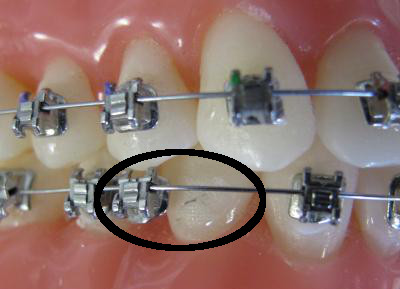
Why Do Braces Break, and What Should I Do?


Two questions come up in our office, why do the braces break off of the teeth and what should I  do if a part of your appliance or braces breaks or is uncomfortable.  The first thing you should know is that everyone in braces will break an occasional bracket. It happens even to the most careful patients.  If the bracket comes off within the first 24 hours of placement it usually means there was a bad bond of the cement to the tooth. Although we use the highest quality orthodontic cements available (3M Unitek) any saliva that gets onto the tooth while bonding will disrupt/weaken the bond of the cement to the tooth.  However, if the bracket comes off after 24 hours of bonding then it usually is due to biting or chewing.  This is due to either the bracket being in the "way of the bite" or patients biting into something too hard which can put a lot of force onto the bracket an knock it off of the tooth.

The second question we get is" what should I do about a broken bracket or appliance"? Rarely ever is this an "emergency" that needs to be treated immediately, unless there is something that is hurting or preventing you from being able to eat or talk.  If the wire or appliance is not bothering you then you should make an appointment to come back in to get the bracket re-cemented. If you are in the first 6-8 months of your treatment you should come back in within 1-2 weeks. If your teeth shift back a little at this stage we can recover from this very quickly with no increase in overall treatment time.  But if you are in the later part of your treatment (12-20 months) you should come back in within a week so the teeth don't shift too much.


There are a few easy ways to manage discomfort or broken appliances on the go. Many orthodontic discomforts can be relieved by the use of over-the-counter analgesics like acetaminophen or ibuprofen or with the use of relief wax. For minor tooth discomfort, use whatever pain reliever works best for you when you have a headache. If a wire or bracket is causing your cheeks or gums discomfort, relief wax can be found at our office or at major chains and just needs to be applied to the area to make the uncomfortable appliance smooth to the touch. If a wire is too long, you can often use new nail clippers to clip the wire until you can make it into our office.